


A garden bench is the heart of a tranquil outdoor space. It offers a place for quiet reflection or a chat with a friend. Yet, choosing the right garden bench can feel surprisingly complex. An extensive range of materials, styles, and sizes are available. This can make it easy to feel overwhelmed. You may wonder which timber best endures British weather. How can you ensure a high-quality, lasting investment?
This comprehensive guide provides clear, practical advice. We will walk you through the benefits of different materials. These range from durable Teak to low-maintenance modern composites. You will learn how to select a style that perfectly complements your garden. Understand the simple steps required for its care. Our goal is to give you confidence. Choose the perfect garden bench. It will be a comfortable, stylish, lasting addition you cherish.
Why a Garden Bench is More Than Just a Seat
A high-quality garden bench offers more than a simple place to sit. It is a key element that can transform your outdoor area. It provides structure, purpose, and a touch of elegance. A well-chosen bench serves as a beautiful focal point. It's an invitation to pause and a comfortable spot. Enjoy the garden you have worked hard to create. It becomes a destination in its own right. It is a social hub for conversations. It links you quietly to the natural world.
For a closer look at the simple, effective structure of a classic bench, the following video offers some insight:
Creating a Peaceful Retreat
Imagine a quiet corner dedicated entirely to relaxation. Position a garden bench to face a favourite flowerbed. Or, perhaps a tranquil water feature or the setting sun. You create a personal sanctuary. This becomes the perfect spot for enjoying a morning coffee. Or, read a book with only the sounds of nature. Such a dedicated outdoor space provides proven psychological benefit. It helps to reduce stress and improve your overall well-being.
Enhancing Your Garden's Aesthetics
The right bench can complete your garden's design. A rustic wooden bench complements a cottage theme. A sleek metal or stone design suits a modern layout. Strategically placed, it can break up a long path. It can also add visual interest to a forgotten corner. The material itself adds character. While Benches are typically made of wood, many options exist. Weathered teak or classic painted hardwood define the garden's atmosphere.
Choosing the Right Material for Your Garden Bench: A Durability & Style Comparison
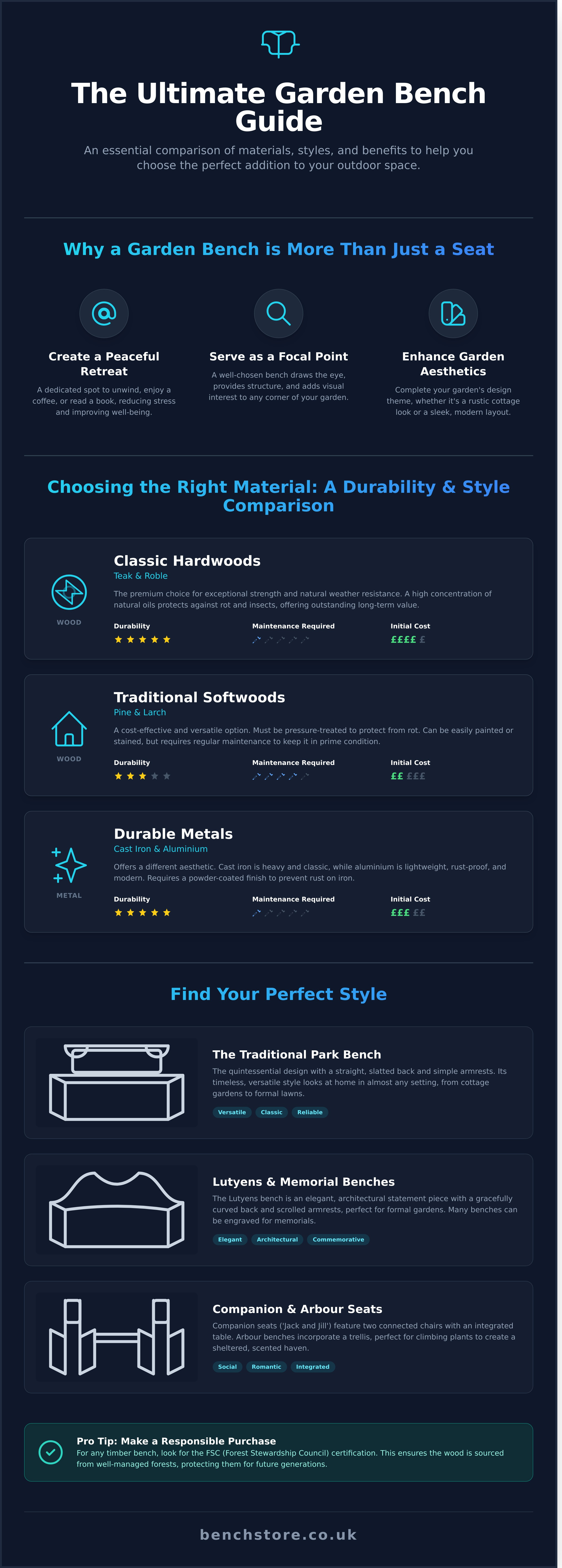
The material of your garden bench is crucial. It determines its lifespan, especially given UK weather. Your choice influences appearance, durability, and maintenance. We group popular options into three main categories. These are classic hardwoods, traditional softwoods, and durable metals.
Understanding upkeep is key to your investment. The Royal Horticultural Society offers excellent guidance. See Essential Care for a Long-Lasting Garden Bench. This covers all common materials. For a responsible purchase, look for FSC certification. This indicates timber from well-managed forests.
Classic Hardwoods (Teak, Roble)
Hardwoods like Teak and Roble are premium choices for outdoor furniture. They are renowned for exceptional strength and natural weather resistance. Teak contains high concentrations of natural oils. These act as a protective barrier against rot and insects. Left untreated, these high-quality benches weather gracefully. They develop an elegant, silvery-grey patina over time. While they cost more initially, their longevity offers outstanding long-term value. They also require minimal upkeep.
Traditional Softwoods (Pine, Larch)
Softwoods such as Pine and Larch offer a cost-effective alternative. They are popular for garden seating. To withstand elements, these timbers must be pressure-treated. This protects them from rot and decay. A key advantage of softwood is its versatility. It can be easily painted or stained. This complements your garden’s colour scheme. Be prepared for more regular maintenance. Annual cleaning and re-application of finishes keep your bench prime.
Durable Metal Benches (Cast Iron, Aluminium)
Metal brings a different aesthetic and properties to the garden. Cast iron is traditional, offering a classic look. It provides substantial weight and sturdiness. Aluminium is lightweight, rust-proof, and used in modern designs. For iron benches, a high-quality powder-coated finish is essential. This prevents rust. While extremely durable, metal benches can be cold. You may wish to add cushions for comfort.
Finding Your Perfect Style: From Classic Park Benches to Companion Seats
Choosing the right garden bench is more than finding a place to sit. It's about selecting furniture that complements your home and garden. A well-placed bench can serve as a focal point. It can also be a quiet retreat or a social hub. Consider how you intend to use the space. Which style aligns with your overall aesthetic? Following basic landscape design principles helps. Ensure your bench enhances, not detracts from, your garden.
The Traditional Park Bench
The quintessential park bench features a timeless design. It has a straight, slatted back and simple armrests. Its enduring popularity comes from its versatility. This classic style looks at home in almost any setting. From a rustic cottage garden to a formal lawn. It is available in a wide range of high-quality materials. These include durable teak and modern metal. It is a reliable and stylish choice for any outdoor space.
Lutyens and Memorial Benches
For a distinctive statement piece, consider the Lutyens bench. It offers an elegant, architectural design. It's inspired by the work of Sir Edwin Lutyens. With its gracefully curved back and scrolled armrests, it suits formal gardens. Many traditional benches can be adapted as memorial benches. They can be fitted with an engraved plaque. This commemorates a loved one or special occasion. It creates a lasting tribute.
Companion Seats and Arbour Benches
If you envision sharing quiet moments, a companion seat is excellent. Also known as a 'Jack and Jill' seat. This design features two connected chairs. They are often separated by a small, integrated table for drinks. For romance, an arbour bench incorporates a trellis or archway. This provides a beautiful structure for climbing plants. Roses or clematis can create a scented, sheltered haven.
Practical Benches with Storage
A storage bench offers the perfect blend of form and function. This clever design combines comfortable seating. It has a built-in, weather-resistant storage box beneath the seat. It provides an ideal solution for keeping your patio tidy. Organise your decking area. Store cushions, garden tools, or children's outdoor toys. View our collection of practical storage benches.
[
Download
](https://getautoseo.com/screenshots/getautoseocom_1769805173_yOYF8XlM.jpg)
Feedback & Recreate
Delete
Sizing and Placement: Making the Most of Your Outdoor Space
Selecting the perfect garden bench involves more than choosing a style. The size and placement are crucial. They create a functional, visually appealing outdoor space. Before purchasing, measure your intended location carefully. A bench that is too large can overwhelm a small patio. One too small may look lost in a spacious lawn.
Proper planning ensures your new bench fits and enhances. It provides a comfortable spot for years of enjoyment.
Understanding Standard Bench Sizes
Our high-quality benches are available in several standard sizes to suit any garden layout. Considering the scale of your space will help you choose a bench that feels balanced and proportional.
2-Seater (approx. 4ft / 120cm): This compact size is ideal for smaller areas such as a balcony, a quiet front garden, or a cosy nook on a patio. It provides intimate seating without taking up valuable space.
3-Seater (approx. 5ft / 150cm): The most popular and versatile option, the 3-seater offers generous seating for family and friends. It is substantial enough to make a statement but fits comfortably in most medium-to-large gardens.
4-Seater (approx. 6ft / 180cm): For those with spacious gardens or a large family, a 4-seater bench provides ample room. It works beautifully as a focal point in an expansive lawn or along a long garden wall.
Placement Tips for Maximum Impact
A thoughtfully positioned garden bench transforms any ordinary spot. It creates a charming retreat. When deciding on location, consider two views. The view of the bench from your home. Also, the view you will have while seated. Remember to leave enough clearance for easy access and legroom.
On a Patio: Position your bench against a wall to create a defined seating area that feels secure and sheltered. It can also be used to frame the edge of the patio, separating it from the lawn or flowerbeds.
On a Lawn: To ensure stability, place your bench on firm, level ground. This prevents it from wobbling or sinking into the soil, providing a safe and comfortable seating experience.
Under a Tree: Create a classic, tranquil setting by placing a bench under the canopy of a mature tree. This offers a shady escape on hot summer days and a wonderful spot to read or relax.
Along a Path: A bench situated along a garden path provides a welcome resting point and encourages a leisurely journey through your garden, turning a simple walk into an experience.
Essential Care for a Long-Lasting Garden Bench
A high-quality garden bench is an investment. It provides years of enjoyment. Maintaining its beauty and integrity is straightforward. Durable materials like Teak and aluminium require minimal attention. A simple annual care routine ensures your bench looks its best. It will look good season after season.
We recommend a simple, seasonal approach to maintenance:
Spring: Give your bench a thorough clean and inspection after winter.
Summer: Simply enjoy your bench, wiping it down as needed.
Autumn & Winter: Protect your bench from the harshest weather, ideally with a cover.
Caring for Wooden Benches
For most wooden benches, an annual clean is needed. Use a soft brush and warm, soapy water. This removes dirt and algae. For hardwoods like Teak, protective treatment is aesthetic. It's not a structural necessity. To maintain original honey-brown colour, sand rough spots lightly. Then, apply a suitable teak oil. Otherwise, let it weather naturally. It will develop a beautiful silver-grey patina.
Maintaining Metal Benches
Metal benches are exceptionally durable. For cast iron or steel, check annually for chips. Look for chips in the paint or powder coating. Touching up small scratches with metal paint prevents rust. This keeps your bench in pristine condition. For rust-proof materials like aluminium, wipe with a damp cloth. This is sufficient to keep it looking clean and smart.
The Importance of a Good Bench Cover
The most effective way to protect your garden bench is with a cover. A breathable, waterproof cover shields it. It protects from British winter, rain, frost, and UV damage. It also keeps it clean from bird droppings and leaves. This means less work to get it ready for spring. Investing in a quality cover extends your furniture's life.
Ready to protect your investment? Find the right all-weather cover for your bench.
Your Perfect Garden Bench Awaits
Choosing the perfect garden bench is a rewarding decision. It's key to balance durable, high-quality materials with style. That style should complement your unique outdoor space. By carefully considering size and placement, you can create a cherished focal point. It will be for relaxation and enjoyment, lasting for years.
With over 35 years of experience, we understand exceptional outdoor seats. Our commitment is to provide durable, elegant benches. They are crafted from high-quality, sustainably sourced materials. This ensures your investment is beautiful and responsible. We are dedicated to helping you find the ideal piece. Complete your garden sanctuary with us.
Ready to find your ideal outdoor seat? Explore Our High-Quality Garden Benches today and enjoy free delivery to most of mainland UK. We are confident you will find the perfect addition to bring you moments of peace and comfort in your garden.
Frequently Asked Questions
What is the best material for a garden bench in the UK?
For the unpredictable UK climate, dense hardwoods are superior. Teak and Roble are excellent choices. Their natural oils provide resistance to moisture and rot. This ensures longevity with minimal maintenance. Cast aluminium is another durable, rust-proof option. It offers traditional style without cast iron's upkeep. For a budget-conscious choice, treated softwoods are suitable. Pine will require regular treatment to protect it from elements.
How long do wooden garden benches last?
The lifespan of a wooden garden bench depends on wood type and maintenance. A high-quality hardwood bench, like Teak, can last over 25 years. It often becomes a generational piece of furniture. Benches from treated softwood have a shorter lifespan. Typically, they last around 10 to 15 years. This assumes regular maintenance with wood preservatives. This fends off rot and decay.
Do I need to treat a new teak garden bench straight away?
No, treating a new teak garden bench immediately is unnecessary. Teak's high natural oil content makes it inherently durable. It is naturally weather-resistant. Left alone, it will weather to an elegant silvery-grey patina. To preserve its original golden-honey colour, apply a teak protector. This is a purely aesthetic choice. It is not required for structural integrity or long life.
How do I secure a garden bench to stop it from being stolen?
To secure your bench, a ground anchor kit is most effective. These kits allow bolting the bench legs directly. Bolt into a hard surface like a patio slab or concrete. This makes it extremely difficult to move. For a less permanent solution, use a heavy-duty security chain. Or, use a cable and a robust padlock. Fasten the bench to an immovable object. Examples include a deeply-rooted tree or a permanent structure.
Can you leave a garden bench outside all year round?
Yes, a high-quality garden bench can be left outside. This applies to hardwood or metal benches in the UK. They are designed for year-round use. These materials are chosen for durability. They withstand rain, frost, and sun. While not essential, a breathable cover helps. Use it during harsh winter months. This protects the finish and reduces spring cleaning. It helps prolong the bench's pristine condition for years.
Is it difficult to assemble a garden bench?
Most garden benches are designed for straightforward home assembly. They typically arrive flat-packed with necessary fittings. Clear, step-by-step instructions are included. Assembly usually involves attaching main components. These are the back, seat, and legs, with a few bolts. One person can generally complete the process. It takes under an hour using basic household tools. A spanner or screwdriver is sometimes included.
What is the difference between a 2-seater and a 3-seater bench?
The main difference is their physical size and seating capacity. A standard 2-seater bench is typically around 1.2 metres (4ft) wide, providing comfortable seating for two adults. A 3-seater bench is larger, usually measuring 1.5 metres (5ft) or more in width. This provides more generous space for two people or can comfortably accommodate three. Your choice should depend on the available space in your garden and how many people you wish to seat.


