


The £45 bargain bench you bought for your patio this summer might actually be the most expensive piece of furniture you ever own. It's easy to be tempted by the low prices and trendy styles found in high-street aisles, but after a single season of British rain, that deal often turns into a wobbly, warped disappointment. Many homeowners find themselves searching for the range garden bench alternatives after discovering that thin slats and rusting fixings simply don't stand up to the elements.
We believe your garden deserves a reliable, comfortable place to relax that doesn't need replacing every two years. This guide explains why specialist garden benches offer superior longevity and value compared to budget high-street options. We'll examine the vital differences in timber grading, traditional joinery, and ergonomic comfort that define premium brands like Alexander Rose. You'll discover how to choose a piece of furniture built for a lifetime of service in a traditional British garden, ensuring your investment remains beautiful and sturdy for decades to come.
Key Takeaways
- Understand the difference between seasonal flat-pack furniture and specialist benches built with traditional joinery for long-term stability.
- Identify why Grade A Teak and Roble hardwood provide the best natural protection against the UK's damp climate and rot.
- Evaluate the range garden bench alternatives by looking for high-quality materials that age beautifully with minimal maintenance.
- Learn how to select the ideal size and ergonomic design to create a comfortable, lasting focal point in your outdoor space.
The Range vs. Specialist Benches: A Comparison of Quality and Value
High-street retailers like The Range are popular for quick, affordable seasonal refreshes. They offer "unbelievable value" that appeals to those looking for an immediate solution for a summer afternoon. However, these budget options often rely on fast-growing softwoods or metal components that struggle with the British climate. When looking for the range garden bench alternatives, the real value lies in the hidden details of construction rather than the initial price tag.
To better understand how quality design transforms an outdoor space, watch this helpful video:
With over 35 years of experience in the garden centre industry, we know that true quality starts with timber selection. Specialist retailers focus on Grade A Teak or Roble hardwood, which contain natural oils to prevent rot. While a budget bench might use simple screws that eventually loosen and rust, premium alternatives rely on traditional woodworking joinery like mortise and tenon joints. This ensures the frame remains structurally sound even as the wood expands and contracts with the changing seasons. The "out-of-the-box" experience of a flat-pack bench often feels sturdy at first, but it lacks the internal integrity required for a decade of use.
At a Glance: Specialist Alternatives vs. High-Street Retailers
Selecting a specialist bench is a "buy once, buy well" decision. The differences in design and durability are clear:
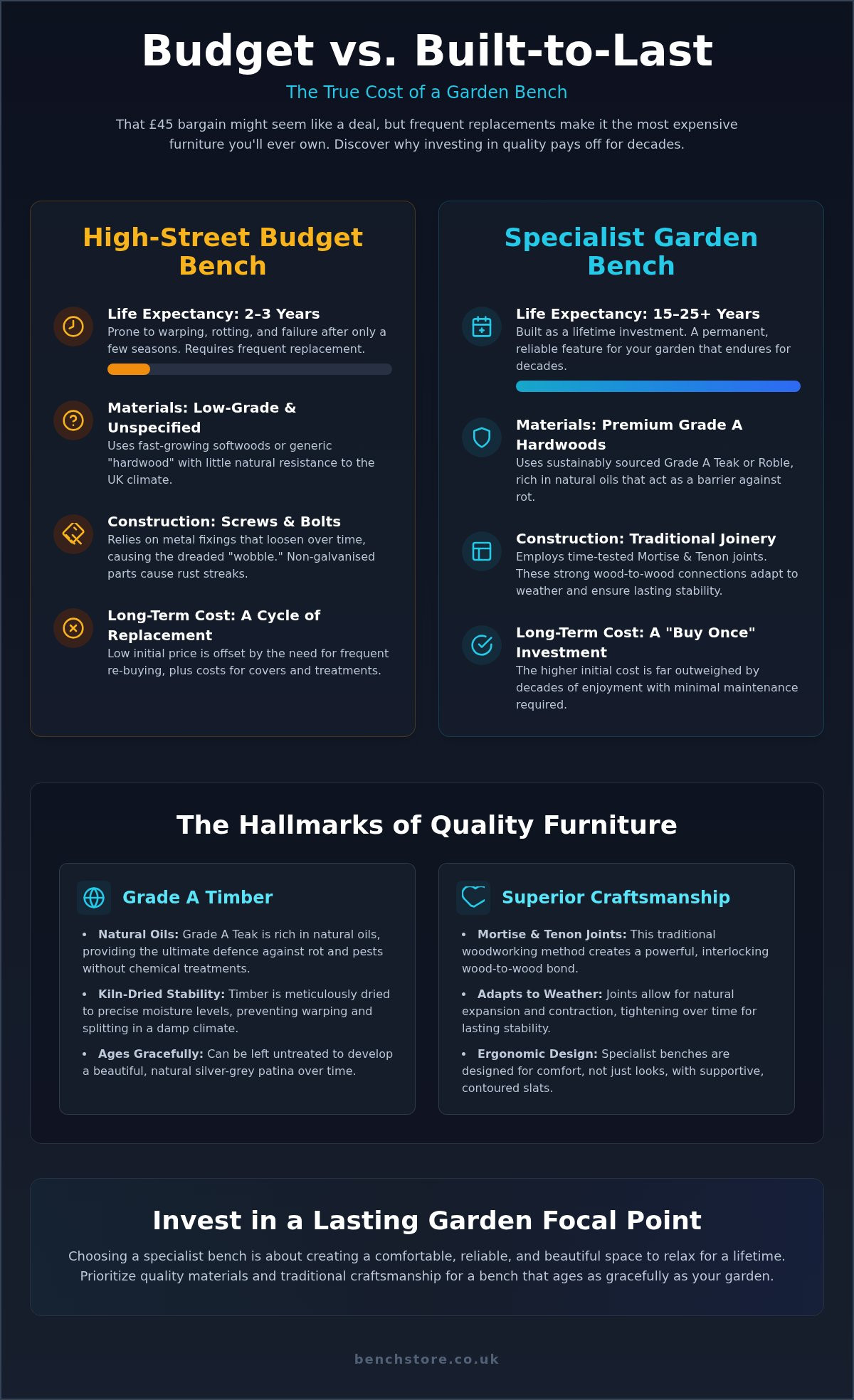
- Life Expectancy: High-street benches typically last 2 to 3 years before warping or rotting. Specialist alternatives are built to last 15 to 25 years.
- Design Philosophy: Mass-market products follow short-term trends and use thin slats. Specialists prioritise ergonomic, traditional craftsmanship that supports the body comfortably.
- Long-term Costs: Cheap benches often require expensive covers or frequent replacement. Investing in the range garden bench alternatives made from high-quality teak means the wood can age naturally to a beautiful silver-grey without the need for constant chemical treatments.
Material Matters: Why Timber Grade and Joinery Define Your Bench
Many high-street retailers use the generic label "hardwood" to describe their products. This is often a trap. Fast-growing, low-density timbers are technically hardwoods but they lack the structural integrity of premium species. When considering the range garden bench alternatives, it's essential to look for Grade A Teak. This heartwood is rich in natural oils. It provides the ultimate defence against rot without needing constant chemical treatment. Mortise and tenon joints are the hallmark of high-quality garden furniture because they provide a permanent, structural bond that withstands the natural movement of the wood.
Teak vs. Generic Wood: What Are You Actually Buying?
Specialist brands like Alexander Rose prioritise sustainable sourcing and high-grade timber. Unlike mass-produced items, these benches undergo meticulous kiln-drying. This process reduces moisture content to precise levels, which is vital for preventing warping and splitting in the unpredictable British climate. For a deeper look at material selection, read A Complete Guide to Choosing the Perfect Garden Bench. Following expert advice on Maintaining Garden Seats and Tables ensures your investment remains a centrepiece for years.
The "Wobble" Test: Joinery and Hardware
Budget benches often rely on metal screws and bolts. These fixings inevitably loosen, leading to the dreaded "wobble" after just one season. Non-galvanised metal also causes unsightly rust streaks on your patio or decking. High-quality the range garden bench alternatives use traditional dowelled joints instead. These wood-to-wood connections are designed to adapt to temperature and humidity changes, tightening as the wood naturally breathes. You can browse our collection of premium teak benches to see the difference that 35 years of industry experience makes in every joint.
Longevity in the UK Climate: Will Your Bench Survive the Winter?
British winters test every piece of outdoor furniture. High-street options often rely on topical stains that flake within a year when exposed to frost and UV rays. When you evaluate the range garden bench alternatives, the financial benefit of a specialist bench becomes clear through a "cost per year" calculation. A budget bench might cost £60 but only last two seasons. This equates to £30 per year. In contrast, a high-quality teak bench can serve your garden for over 20 years. This makes the specialist choice a far smarter long-term investment. You can consult Timber Development UK's wood species database to see how different timbers rank for durability in damp conditions.
Do You Really Need to Store It?
Most budget furniture requires indoor storage to survive the winter. High-quality teak and roble benches are designed to remain outdoors year-round. They don't rot. While they don't need protection from rain, breathable covers are still useful. They keep off bird lime and tree sap. This saves you valuable shed space. It also removes the effort of moving heavy furniture twice a year. If you want a bench that stays in place through every storm, choosing a specialist build is essential.
The Natural Aging Process of Quality Timber
Teak naturally transitions to a sophisticated silver-grey patina over time. This isn't a sign of decay. It's a protective layer formed by the wood's natural oils. Cheap wood just turns black and soft. If you prefer the original honey colour, a simple cleaning and light sanding can restore the look. Choosing the range garden bench alternatives means enjoying a material that ages gracefully rather than one that simply wears out. To find a durable centrepiece for your patio that stands up to any weather, view our range of weather-resistant garden benches today.
Choosing the Right Alternative for Your Garden
Choosing the right piece for your outdoor space requires a focus on both dimensions and lifestyle. You should measure your intended area carefully before making a purchase. A 4ft bench is typically a compact two-seater, perfect for a quiet nook or a smaller balcony. If you have more room, a 5ft bench serves as a comfortable three-seater and creates a more significant architectural presence on a patio. For a more intimate setup, companion seats are excellent the range garden bench alternatives. These "love seats" feature a central table joined to two ergonomic chairs, providing a functional and stylish place for drinks or books.
Brand names like Norfolk Leisure and Alexander Rose offer a level of security that high-street retailers cannot match. These companies specialise in high-quality outdoor furniture and maintain rigorous standards for timber grading. Their products are designed to be permanent fixtures in your garden. We recommend a "buy once, buy well" approach. While the initial cost is higher than a budget shop, the absence of replacement costs over the next two decades makes it the more economical choice for the savvy homeowner.
Why Bench Store is the Specialist Choice
Our curated selection focuses exclusively on durable materials like Grade A teak and roble. We don't stock flimsy alternatives because we believe in products that last. With over 35 years of industry experience, we help you navigate the technical details of timber selection and joinery. This expertise ensures you find the range garden bench alternatives that suit your specific garden environment. Whether you need a traditional park bench or a modern curved design, we provide the knowledge to help you choose with confidence.
Explore our collection of high-quality garden benches and discover the difference that specialist craftsmanship makes to your outdoor living area.
Investing in Your Garden's Future
Choosing a specialist bench is about more than just aesthetics; it's a commitment to quality and comfort that lasts for decades. We've explored how Grade A Teak, traditional joinery, and ergonomic designs provide a level of durability that high-street retailers simply don't match. By selecting the range garden bench alternatives that prioritise material integrity, you avoid the cycle of annual replacements and the frustration of rotting timber or wobbly joints.
With over 35 years of garden furniture expertise, we take pride in being authorised stockists of premium brands like Alexander Rose and Norfolk Leisure. Our collection is curated to ensure every piece meets the highest standards of craftsmanship. We also provide free UK mainland delivery on selected orders to ensure your new furniture arrives safely at your door.
Browse Our Range of Durable, High-Quality Garden Benches
Your garden deserves a reliable centrepiece that ages gracefully. We look forward to helping you create a beautiful and comfortable outdoor living space that stays sturdy for many seasons to come.
Frequently Asked Questions
Are high-street garden benches made from real hardwood?
Technically yes, but "hardwood" is a broad category. Many budget retailers use fast-growing, low-density timbers like acacia or eucalyptus. While these are technically hardwoods, they lack the high oil content found in Grade A Teak. This makes them far more susceptible to rot and warping in damp British weather. When searching for the range garden bench alternatives, always look for specific timber species rather than a generic hardwood label.
How long should a high-quality wooden garden bench last in the UK?
A high-quality bench made from Grade A Teak or Roble should last between 15 and 25 years. This durability is due to the wood's natural resistance to decay and the use of traditional joinery. In contrast, budget alternatives often fail within two or three seasons as joints loosen and wood degrades. Investing in specialist quality ensures your garden furniture remains a reliable, sturdy, and beautiful feature for a generation.
What is the seating capacity difference between a 4ft and 5ft garden bench?
A 4ft bench is a compact two-seater, making it the ideal choice for small balconies or secret garden corners. A 5ft bench is a standard three-seater that provides a more substantial presence on a main patio. The extra foot allows for more comfortable social seating or space to stretch out. Both sizes are excellent the range garden bench alternatives for homeowners who prioritise long-term structural integrity over seasonal fashion.
Does teak furniture need to be oiled every year to prevent rot?
No, Grade A Teak doesn't need annual oiling to prevent rot. The timber's high natural oil content acts as a built-in preservative against the elements. Oiling is purely an aesthetic choice if you prefer a golden-brown look. If you don't treat the wood, it will gracefully age into a classic silver-grey patina. This change is entirely natural and doesn't compromise the strength or lifespan of your high-quality garden furniture.
Why are specialist benches more expensive than high-street fashion brands?
Specialist benches carry a higher initial price because they use superior materials and construction methods. We focus on Grade A heartwood and traditional mortise and tenon joints instead of simple metal fixings. These premium materials and skills ensure the bench remains stable for decades. With over 35 years of experience, we believe the higher upfront cost represents better value than buying a new budget bench every two or three years.


